AI tools are becoming useful across writing, research, design, productivity, coding, marketing, educ
AI Tools: A Guide to Finding the Right AI Software
Artificial intelligence has developed into a broad technology category with applications across both professional and everyday digital activities. From writing assistants and image generators to coding platforms and research applications,
AI tools now cover many different use cases.
Because the number of available tools continues to grow, finding suitable software can be challenging. An organized
AI tools directory can make the discovery process easier by grouping platforms according to their functions, industries, and capabilities.
What Are AI Tools?
AI tools are software applications that use artificial intelligence techniques to perform or assist with specific tasks. Depending on their design, they may process text, images, audio, video, code, data, or other forms of digital information.
Common examples include writing assistants, conversational AI systems, image-generation software, transcription tools, programming assistants, research applications, and productivity platforms.
Why Use an AI Tools Directory?
An AI tools directory provides a structured way to discover artificial intelligence software. Instead of searching individually for every possible application, users can browse categories and identify tools designed for particular purposes.
A directory may organize software into areas such as:
- Writing and content creation
- Image and graphic generation
- Video and audio production
- Coding and software development
- Research and education
- Marketing and business
- Productivity and automation
This structure makes it easier to narrow a large selection of software into relevant categories.
Best AI Tools for Different Tasks
The term
best AI tools can mean different things depending on the user's requirements. A tool that is useful for generating marketing copy may not be suitable for programming or data analysis.
When comparing AI software, users can consider factors such as functionality, ease of use, available integrations, output quality, supported formats, pricing structure, and privacy features.
AI Tools for Writing
AI writing tools can assist with drafting, editing, summarizing, brainstorming, and organizing written information.
They can be useful for creating initial drafts or improving the structure of existing material. Human review remains important when accuracy, originality, and context are essential.
AI Tools for Images and Design
Image-generation and design tools can transform text descriptions into visual concepts. Other applications can assist with background removal, image enhancement, graphic layouts, and creative editing.
These tools are increasingly used for prototypes, presentations, marketing materials, and creative projects.
AI Tools for Work and Productivity
Productivity-focused AI applications can help organize information, summarize documents, generate notes, automate repetitive processes, and support workplace workflows.
The value of these applications often depends on how well they integrate with existing software and how much manual work they can reduce without sacrificing accuracy.
AI Tools for Developers
Software developers can use AI applications for code generation, debugging assistance, documentation, testing, and code explanation.
Programming-focused tools can be particularly useful when integrated into development environments, allowing developers to work with AI assistance alongside their existing coding workflows.
How to Choose an AI Tool
Choosing an AI application should begin with a clearly defined task. Once the objective is known, users can compare tools according to practical requirements.
Important factors may include:
- Purpose: Determine the exact task the software needs to support.
- Features: Check whether the tool provides the required capabilities.
- Ease of use: Consider the learning curve and interface.
- Compatibility: Review integrations with existing applications.
- Cost: Compare free plans, subscriptions, usage limits, and other pricing models.
- Privacy: Understand how submitted information is handled.
The Growing AI Software Ecosystem
The AI software ecosystem continues to expand as developers create specialized applications for increasingly specific tasks. Instead of relying on one general-purpose platform, users may combine several AI tools to create a workflow tailored to their needs.
An organized
AI tools directory can therefore serve as a useful starting point for discovering software across different categories.
Conclusion
AI tools now support a wide range of digital activities, including writing, design, research, programming, productivity, and business operations. With so many applications available, structured discovery can help users identify software that matches their particular requirements.
For people exploring different categories of artificial intelligence software,
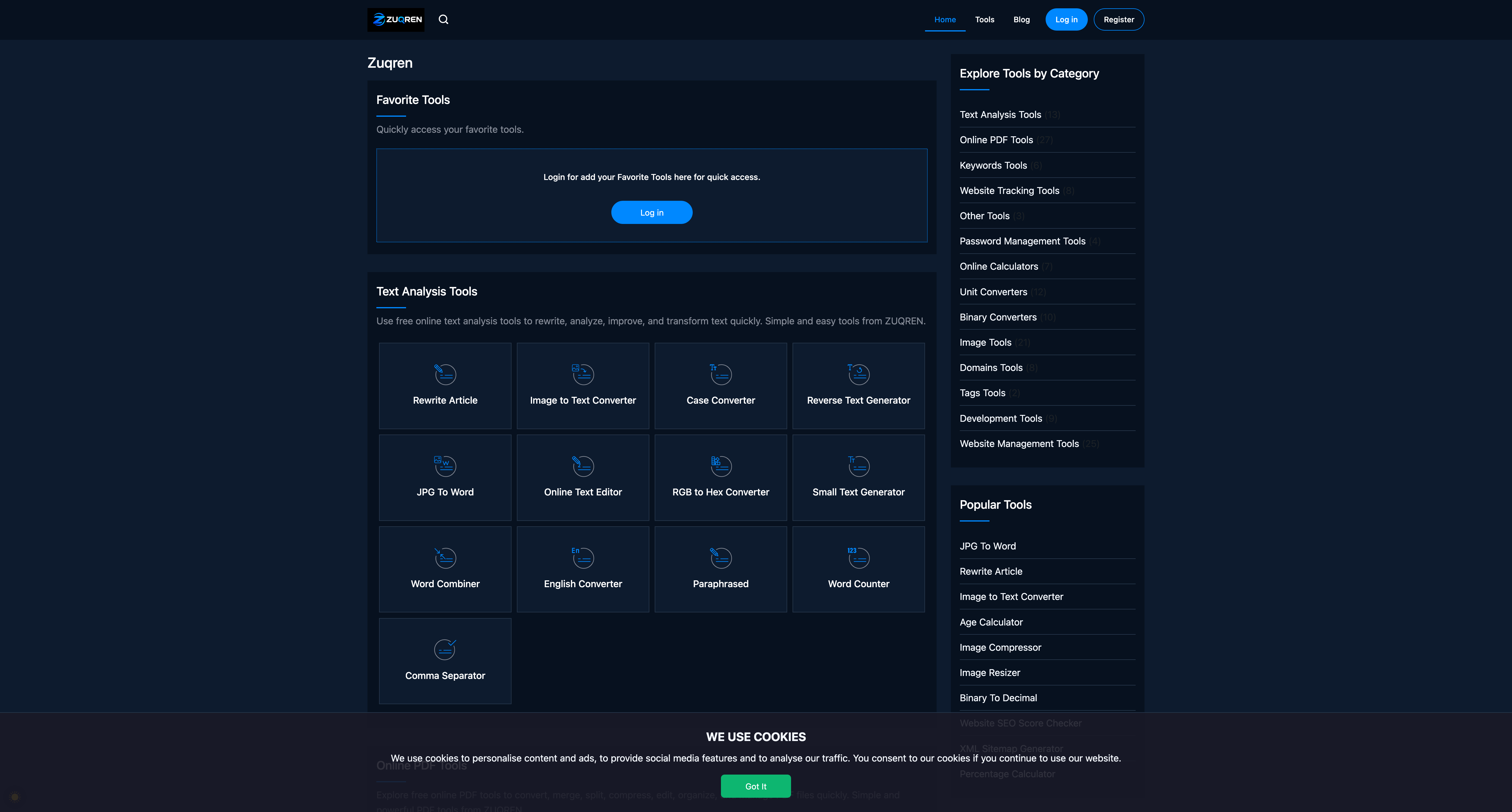
Zuqren provides a place to discover AI tools and explore the growing AI software ecosystem.
Comments
Be the first to comment on this article!